
Javert Meaning: The Shocking Truth Nobody Explains
You finish Les Misérables and one character just won’t leave your head not Valjean, but the man chasing him. Something about his collapse feels bigger than the story itself.
That’s exactly why so many readers search for the javert meaning behind this inspector’s obsession, rigidity, and tragic end. This guide breaks down the javert definition, his psychology, his symbolism, and why he still shows up in memes and modern debates about justice. Stick around it gets deeper than “strict cop.”
javert meaning

Understanding the javert meaning starts with one simple fact: he isn’t just a side character, he’s a walking argument about law. His javert definition is tied less to a dictionary and more to what he stands for inside Victor Hugo’s story.
What Does Javert Meaning Really Represent in Literature?
- Justice without room for mercy or context
- Rigidity as both his strength and his flaw
- Law enforcement treated as a moral religion
- Duty placed above personal judgment
- Order valued more than human complexity
- Certainty that never allows doubt
| Aspect | What It Signals |
| Core idea | Law must never bend, ever |
| Reader takeaway | Rules without heart eventually break |
| Literary function | Contrast to Valjean’s mercy |
Example in discussion: Reader 1: “Why does everyone say Javert’s meaning is about more than police work?” Reader 2: “Because he represents a whole belief system, not just a job.”
javert definition
If you want a working javert definition, think of him as the human embodiment of the law itself. He doesn’t interpret rules he becomes them, and that’s the whole point of his character.
How Is Javert Defined Across Different Readings?
- Inspector obsessed with catching Jean Valjean
- Symbol of moral absolutism in fiction
- Antagonist who isn’t truly evil
- Enforcer who trusts systems over people
- Foil designed to highlight Valjean’s growth
Example in chat: Student 1: “Is the javert definition just ‘strict cop’?” Student 2: “No, it’s more like ‘law with no capacity for mercy.'”
define javert
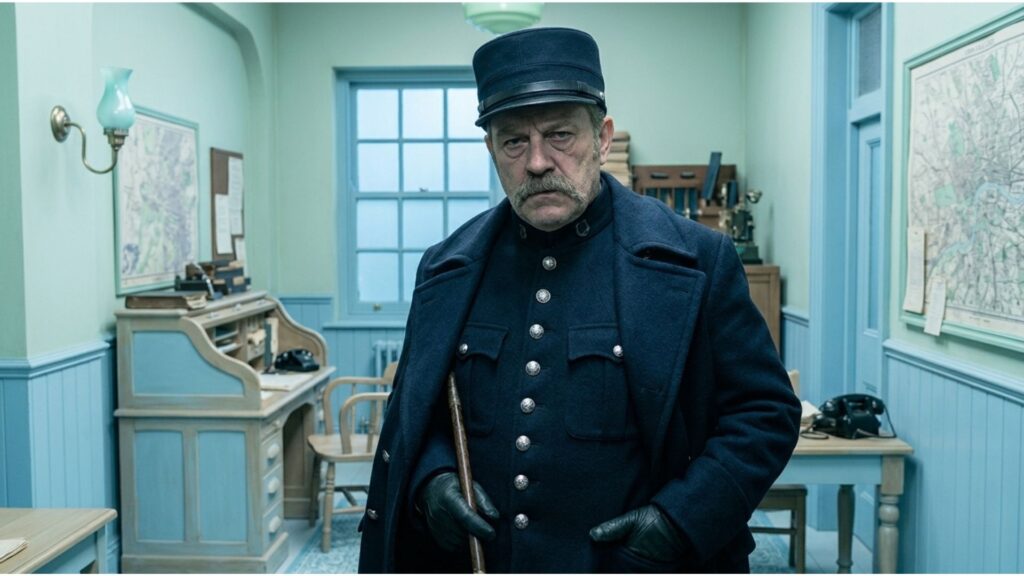
To define javert properly, you have to separate the job from the philosophy. He’s a police inspector by title, but his real identity is built entirely around unbending justice.
- Occupation: police inspector in 19th-century France
- Belief: criminals stay criminals forever
- Weakness: cannot process moral gray areas
- Fate: destroyed by a contradiction he can’t resolve
- Legacy: a cultural shorthand for extreme rule-following
| Trait | Description |
| Flexibility | Almost none |
| Emotional range | Suppressed, controlled |
| Moral compass | Fixed, absolute |
| Growth arc | Collapses instead of adapting |
Example in discussion: Reader 1: “How would you define javert in one line?” Reader 2: “A man who can’t survive the moment law meets mercy.”
Who Is Javert?
Javert is the relentless police inspector in Les Misérables, and his entire life orbits around catching one man. Grasping the javert meaning starts with seeing him clearly first.
He never bends the rules. He believes once someone commits a crime, that identity never changes. This javert definition of “criminal forever” fuels every decision he makes in Victor Hugo’s novel.
- Rank: police inspector, not a judge or lawmaker
- Obsession: Jean Valjean’s parole violation
- Belief system: law is absolute, no exceptions
- Personality: emotionless, disciplined, controlled
- Function in story: living contrast to redemption
Example in chat: Friend 1: “Who is Javert supposed to represent, really?” Friend 2: “Basically the law itself, walking around in a uniform.”
Literal Meaning of the Name “Javert”
There’s no confirmed dictionary origin for the name, but that hasn’t stopped readers from digging into the javert meaning hidden inside the sound of it itself.
Some scholars link it to old French roots tied to warning or reporting, which fits his role as an informant to authority. Others connect it to “turning away,” matching how he turns from compassion every single time.
- Warning: he alerts and reports on suspects
- Reporting: his job depends on surveillance
- Turning away: he rejects emotional nuance
- Symbolic sharpness: the name sounds cold and clipped
- Design choice: Hugo likely built it for tone, not etymology
| Theory | Connection to Character |
| Warning/reporting roots | Matches his law enforcement role |
| “Turning away” idea | Matches his rejection of mercy |
| No confirmed origin | Reinforces symbolic over literal meaning |
Example in discussion: Reader 1: “Does the name Javert actually mean something?” Reader 2: “Not officially, but it sure sounds like law itself.”
Symbolic Meaning | What Does Javert Represent?
Beyond the plot, the deeper javert meaning lives in symbolism. He isn’t simply a man doing his job; he’s an idea Hugo shaped into human form.
He stands for justice stripped of mercy, and that single idea drives the entire second half of the novel. This javert definition, read symbolically, turns him into a warning about systems without flexibility.
- Law vs compassion as his core contradiction
- Punishment valued over rehabilitation
- Order treated as more sacred than people
- Authority followed without question
- Fixed identity clashing against Valjean’s transformation
| Symbol | Meaning |
| Javert | Law without mercy |
| Valjean | Mercy without rigidity |
| Their conflict | Justice’s unresolved tension |
Example in chat: Friend 1: “What does Javert symbolize, honestly?” Friend 2: “A system that can’t handle people actually changing.”
Javert’s Personality | The Anatomy of a Rigid Mind
His personality is where the javert meaning becomes almost uncomfortable to read. He treats duty like scripture, and doubt simply doesn’t exist in his mind.
- Emotionally closed off in nearly every scene
- Obsessed with rules over relationships
- Loyal to authority above personal judgment
- Uncomfortable with any form of mercy
- Isolated by choice and by design
- Driven by black-and-white thinking
Example in discussion: Reader 1: “Would you call Javert emotionally cold?” Reader 2: “Cold isn’t strong enough he’s built like a rulebook.”
Javert vs. Jean Valjean | The Real Conflict
The clearest window into javert meaning is his war with Jean Valjean, which is less a chase and more a philosophical collision.
| Javert | Jean Valjean |
| Law and order | Mercy and redemption |
| Fixed identity | Personal transformation |
| Obedience | Moral choice |
| No exceptions | Second chances |
Valjean proves people can change. That single fact undoes everything Javert has built his life around, and it’s the emotional core of the entire novel.
- Years of pursuit across cities and disguises
- Obsession rooted in ideology, not personal hate
- Breaking point arrives when Valjean spares his life
- Collapse follows because certainty no longer holds
Example in chat: Friend 1: “Why does Javert chase Valjean for so long?” Friend 2: “Because Valjean proves his whole worldview wrong.”
Why Javert Kills Himself | The Literary Explanation
This is the heaviest layer of javert meaning. His suicide isn’t random; it’s the direct result of a belief system that has nowhere left to go.
Jean Valjean spares him even with full power to punish him. That act of mercy creates a contradiction Javert’s rigid mind simply cannot process or absorb.
- Contradiction: Valjean is criminal and kind at once
- Collapse: his mind can’t hold two truths together
- Identity crisis: law defined his entire existence
- No framework: mercy has no place in his system
- Final act: he walks into the Seine River
| Cause | Result |
| Mercy from Valjean | Breaks his moral certainty |
| Rigid worldview | Cannot adapt or bend |
| Loss of purpose | Leads to his death |
Example in discussion: Reader 1: “Why does Javert actually take his own life?” Reader 2: “Because kindness broke a mind built only for rules.”
Javert as a Tragic Figure
Once you sit with the full javert meaning, you stop seeing a villain and start seeing tragedy. He isn’t weak he’s simply too rigid to survive contradiction.
- Never learns flexibility, even under pressure
- Confuses law with absolute truth
- Cannot accept moral complexity
- Ties his identity entirely to duty
- Breaks the moment contradiction appears
Example in chat: Friend 1: “Is Javert really a tragic character?” Friend 2: “Yes his perfection is exactly what destroys him.”
Javert’s Obsession with Valjean | More Than a Chase
What starts as police work becomes something closer to psychological need. This part of the javert meaning shows how deep his fixation actually runs.
- Valjean challenges his belief in fixed identity
- Mercy feels threatening to his entire worldview
- Surveillance and informants fuel years of pursuit
- His identity depends on catching this one man
- Failure would break his entire belief system
| Stage | Description |
| Early pursuit | Professional duty |
| Middle years | Growing obsession |
| Final stage | Psychological dependency |
Example in discussion: Reader 1: “Is Javert’s chase really personal?” Reader 2: “It becomes personal because Valjean threatens his identity.”
Why Do People Still Debate Javert’s Choices Today?
Readers still argue over whether Javert deserved sympathy or judgment, which keeps the javert meaning alive in modern literary conversation and classroom debate.
- Some defend his consistency and discipline
- Others criticize his complete lack of empathy
- Modern readers compare him to real institutions
- Teachers use him to spark ethics discussions
- Fans debate whether his death was inevitable
Example in chat: Friend 1: “Do people still argue about Javert?” Friend 2: “Constantly mostly about whether he was a victim too.”
Real-World Impact | Why Javert Still Matters Today
The javert meaning doesn’t stay locked inside a 19th-century novel. It connects directly to how modern systems sometimes treat people.
- Zero-tolerance school policies that punish minor mistakes harshly
- Legal systems issuing extreme sentences for small offenses
- Bureaucratic rules that ignore personal context
- Authority figures who prioritize rules over people
| Modern Example | Javert Parallel |
| Rigid workplace policy | No exceptions, ever |
| Harsh sentencing laws | Punishment over context |
| Inflexible bureaucracy | Rules above humanity |
Example in discussion: Reader 1: “How is Javert still relevant now?” Reader 2: “Anytime a system punishes people over understanding them.”
Famous Javert Quotes and Their Meaning
His words carry the same weight as his actions, and studying them adds another layer to the javert meaning readers search for most.
- “I do my duty” identity fused with his job
- “Justice must be done” justice means punishment, not mercy
- “A criminal remains a criminal” belief in permanent guilt
- His silence after mercy speaks louder than any line
- His musical solo “Stars” reveals his hidden certainty
- His final monologue shows collapse of belief
| Quote Theme | What It Reveals |
| Duty | Identity tied to law |
| Justice | Punishment over compassion |
| Certainty | No room for doubt |
Example in chat: Friend 1: “What does Javert’s ‘I do my duty’ line really mean?” Friend 2: “That he literally can’t separate himself from the job.”
Common Misconceptions About Javert
Many readers misjudge the javert meaning because they label him a simple villain instead of studying his actual motivations.
- Not truly evil, just extremely rigid
- Doesn’t hate Valjean personally
- Doesn’t enjoy punishment for its own sake
- Suicide isn’t weakness, it’s identity collapse
- Has real moral depth, despite his flaws
Example in discussion: Reader 1: “Isn’t Javert just the bad guy?” Reader 2: “Not really he’s more of a broken believer.”
Javert’s Psychological Profile
Digging into psychology adds real depth to the javert meaning, showing exactly why his mind cracks the way it does.
- Extreme need for order and control
- Difficulty processing emotional nuance
- Strong duty-bound behavior patterns
- Black-and-white thinking in every decision
- Emotional suppression as a coping method
- Identity fused with authority and law
| Trait | Impact |
| Rigidity | Prevents adaptation |
| Suppression | Hides internal conflict |
| Obsession | Fixates entirely on Valjean |
Example in chat: Friend 1: “What’s actually going on in Javert’s head?” Friend 2: “A mind built only for structure, with zero backup plan.”
How Adaptations Changed Javert
Different versions of Les Misérables reshape the javert meaning depending on tone, medium, and audience expectations.
- 1862 novel: colder, more mechanical portrayal
- Musical version: emotional depth through songs like “Stars”
- Film adaptations: some harsher, some more sympathetic
- Modern stage productions: emphasize his inner conflict
- Animated or abridged versions: simplify his complexity
| Adaptation | Portrayal Style |
| Original novel | Cold, systemic |
| Stage musical | Emotional, conflicted |
| Modern films | Sympathetic collapse |
Example in discussion: Reader 1: “Does Javert feel different in the musical?” Reader 2: “Way more emotional you actually hear his doubt.”
The Philosophy Behind Javert | Hugo’s Big Argument
Victor Hugo built Javert as part of a bigger debate, which explains why the javert meaning carries so much philosophical weight.
- Should justice punish or transform people?
- Should law stay rigid or allow mercy?
- Can people truly change, or are they fixed forever?
- Javert answers with certainty; Hugo challenges that certainty
- Valjean’s transformation becomes Hugo’s counterargument
| Question | Javert’s Answer | Hugo’s Answer |
| Can people change? | No | Yes |
| Should law bend? | Never | Sometimes |
| Is mercy weakness? | Yes | No |
Example in chat: Friend 1: “What’s Hugo actually arguing through Javert?” Friend 2: “That rigid law without mercy eventually breaks itself.”
Quick Reference Table | Javert at a Glance
For readers who just want the javert meaning summarized fast, here’s the whole character in one simple breakdown.
| Category | Details |
| Full Name | Inspector Javert |
| Origin | Les Misérables (1862), Victor Hugo |
| Role | Police inspector, law enforcement officer |
| Core Belief | Law is absolute and unbreakable |
| Personality | Rigid, disciplined, emotionally restrained |
| Main Obsession | Jean Valjean |
| Symbolism | Justice without mercy |
| Outcome | Suicide after moral collapse |
- Structured, predictable, and rule-driven by nature
- Powerful until reality refuses to stay simple
- Defined by role rather than personal identity
Example in discussion: Reader 1: “Got a quick summary of who Javert is?” Reader 2: “Law with a badge, basically, until mercy breaks him.”
How Do Readers Interpret Javert’s Meaning Differently?
Not every reader reaches the same conclusion, and that disagreement is part of what keeps the javert meaning so widely discussed online and in classrooms.
- Some see him as a cautionary tale about rigidity
- Others view him as a disciplined, loyal servant
- Literature students often debate his moral status
- Modern audiences relate him to real institutions
- Musical fans focus on his emotional arc instead
Example in chat: Friend 1: “Do people always agree on what Javert means?” Friend 2: “Not at all that’s honestly the best part of the debate.”
Javert Syndrome | Meaning and Usage
Beyond literature, the javert meaning has entered everyday language through the informal term “Javert Syndrome,” describing extreme rule-following.
- A manager who punishes small mistakes harshly
- A teacher who ignores effort and only marks errors
- An authority figure who refuses any exceptions
- A system valuing rules over human context
- Not a clinical term, but a cultural shorthand
| Behavior | Javert Syndrome Trait |
| No exceptions | Rigid enforcement |
| Ignoring context | Rule-first thinking |
| Harsh penalties | Punishment over mercy |
Example in discussion: Reader 1: “What does ‘Javert Syndrome’ actually describe?” Reader 2: “Someone who enforces rules with zero flexibility, ever.”
“Pulling a Javert” | Internet Phrase Explained
Online slang has borrowed the javert meaning too, turning his name into a phrase for overly strict or judgmental behavior.
- Refusing exceptions even in small situations
- Focusing only on rules, ignoring context entirely
- Pushing punishment over basic understanding
- Treating minor issues like serious violations
- Used humorously in memes and forum threads
Example in chat: Friend 1: “What does ‘pulling a Javert’ even mean online?” Friend 2: “Being way too strict about something small and silly.”
Important Question: What Is Javert’s First Name?
A surprisingly common question tied to javert meaning is simple: does he even have a first name in the original text?
- No recorded first name appears in the novel
- Victor Hugo intentionally leaves it out
- Reinforces his role as a symbol, not a private man
- Identity tied to authority, not personal history
- Known only as “Inspector Javert” throughout the story
| Detail | Answer |
| First name given? | No |
| Reason | Emphasizes symbolic role |
| Known as | Inspector Javert |
Example in discussion: Reader 1: “Wait, does Javert even have a first name?” Reader 2: “Nope Hugo never gives him one, on purpose.”
Javert in Modern Discussions | Memes, Opinions, and Community Reactions
Today, the javert meaning lives well beyond classrooms, showing up in memes, debates, and online commentary about justice and authority.
- “No exceptions” guy in meme culture
- “Rule book is my personality” joke format
- Symbol of over-serious enforcement in discussions
- Defended by some as disciplined and consistent
- Referenced in debates about strict punishment systems
| Discussion Topic | Javert Connection |
| Zero-tolerance rules | Direct parallel |
| Fairness vs rules | Central debate point |
| Authority and mercy | Core symbolic conflict |
Example in chat: Friend 1: “Why is Javert still a meme template honestly?” Friend 2: “Because everyone’s met a real ‘Javert’ at some job.”
FAQs
What is the simplest javert meaning?
The javert meaning centers on strict law and order enforced without mercy or exception.
Is Javert a villain?
Not exactly the javert meaning paints him as tragic rather than evil, trapped by his own certainty.
Why does Javert chase Jean Valjean so long?
Because Valjean challenges everything tied to the javert meaning, especially his belief in fixed identity.
Does Javert have a first name?
No, and that gap actually reinforces the javert meaning as a symbol of law itself.
What does “Javert Syndrome” mean?
It’s slang for extreme rule-following, borrowed directly from the javert meaning in literature.
Why does Javert take his own life?
Mercy breaks his rigid belief system, and the javert meaning shows what happens when certainty collapses.
Why is Javert still discussed today?
Because the javert meaning connects directly to real debates about strict justice versus compassion.
Conclusion
The javert meaning ultimately comes down to one idea: law without mercy eventually breaks the person enforcing it. His javert definition isn’t villain or hero it’s a warning about rigidity taken too far. Through his obsession with Jean Valjean, his psychological collapse, and his tragic death, Javert shows readers what happens when a belief system leaves zero room for change. That’s exactly why the javert meaning still resonates in literature classes, online debates, and everyday conversations about justice today. If his story teaches anything, it’s this: rules matter, but humanity has to matter more, or the whole structure eventually falls apart from within.

Samuel Prescott explores Bible meanings, biblical names, and scripture insights, helping readers uncover deeper faith and understanding.