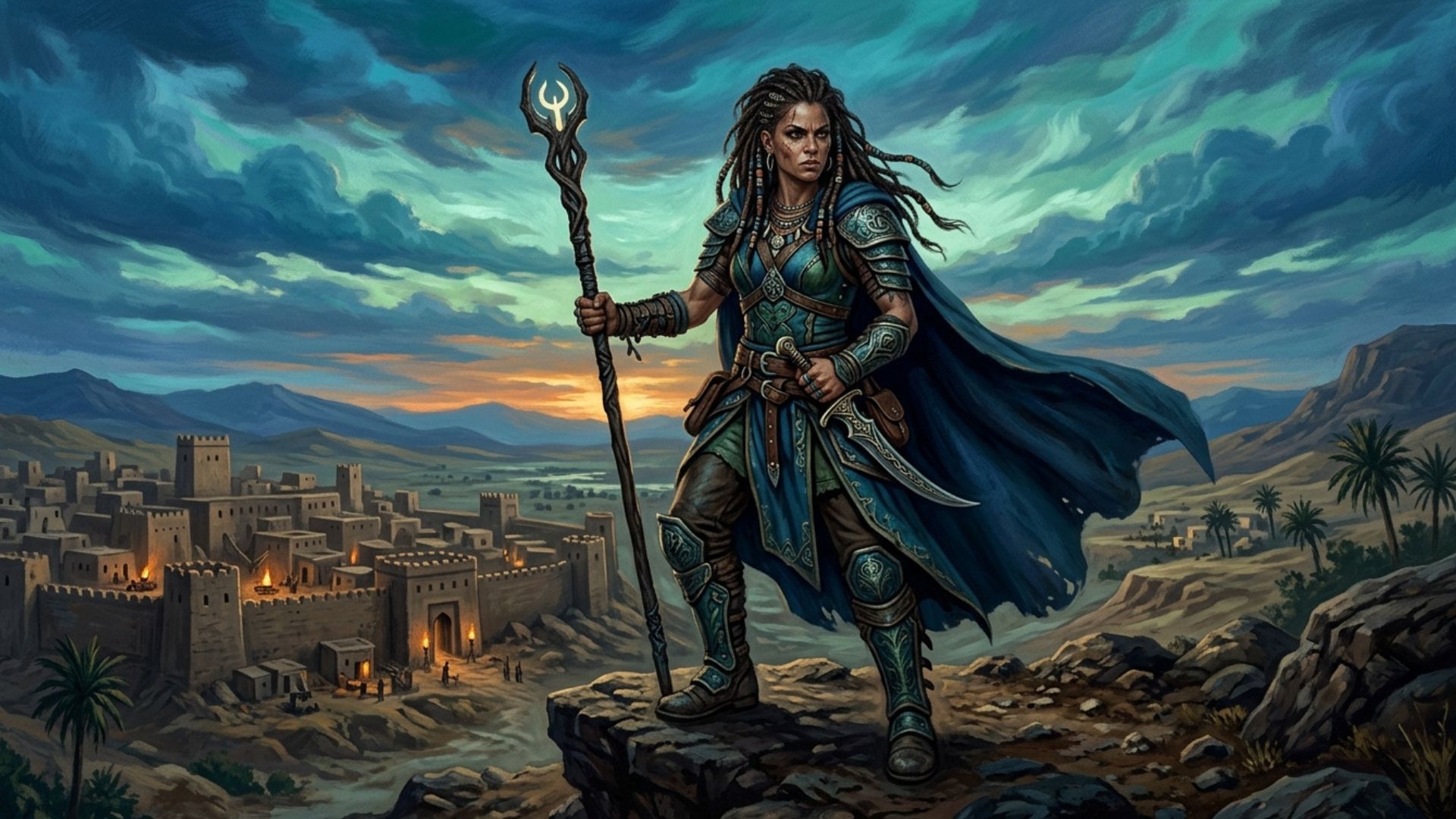
Mazikeen in the Bible: The Shocking Truth and Meaning
Ever binged Lucifer on Netflix at 2 a.m., paused on Maze’s half-rotted face, and thought, “Wait is this actually in Scripture?” You’re not the only one typing that question into Google at midnight, half-curious and half-spooked.
This article settles it once and for all. We’re breaking down Mazikeen in the Bible with real Talmudic sources, Jewish folklore, and the honest truth behind her name because understanding Mazikeen in Bible history means separating television fiction from ancient Hebrew demonology. By the end, you’ll know exactly where she came from, why her name matters, and what she reveals about a much older spiritual world. Keep reading.
Mazikeen in the bible
Let’s answer this directly before anything else: Mazikeen in the Bible does not appear as a named character in any canonical book of Scripture. She’s absent from Genesis, absent from the prophets, absent from the New Testament entirely.
- Zero mentions across all 66 books of the Protestant canon
- No Hebrew manuscript references a demon named “Mazikeen” specifically
- Related concept exists through the plural term Mazikin, not a singular figure
- Fictional character status confirmed by her 1990 comic-book debut
- Root confusion comes from her name sounding ancient and biblical
- Common search because millions watched her on-screen first
Example in chat: Friend 1: is Mazikeen actually in the bible or nah Friend 2: nope, she’s a comic character but her name is real old hebrew
| Question | Straight Answer |
| Is she a canonical figure? | No |
| Does her name origin exist in Judaism? | Yes |
| Is she fictional? | Yes, created in 1990 |
Mazikeen in bible
People searching Mazikeen in Bible are usually trying to verify something they half-remember from a sermon, a Reddit thread, or a late-night Wikipedia rabbit hole. The confusion is understandable given how ancient her name actually sounds.
- Search confusion stems from her name resembling Hebrew vocabulary
- Talmud connection is real, even though the Bible connection isn’t
- Demonology roots trace to post-biblical rabbinic writing, not Torah
- Popular culture blurred the line between scripture and folklore
- Fact-checking matters before quoting her as a “biblical demon”
- Rabbinic literature, not the Old Testament, holds her linguistic ancestor
Example in texting: Friend 1: my pastor mentioned Mazikeen last week lol Friend 2: probably talking about the mazikin demons from jewish folklore, not her specifically
Who is mazikeen in the bible
Here’s the honest answer: nobody, because she isn’t there. But asking who is mazikeen in the bible opens the door to something more interesting the real spiritual tradition she was pulled from by a comic book writer decades ago.
- Neil Gaiman invented her as a singular character in 1990
- Borrowed name comes from an ancient Aramaic demon classification
- Never a person in any historical religious text
- Composite figure blending Lilith mythology with Talmudic demon lore
- DC Comics first published her, not any religious authority
- Modern creation wearing genuinely ancient linguistic clothing
What Does the Name Mazikeen Really Mean?
The short answer: “one who harms.” That single phrase explains almost everything about how she was designed and why the name fits her so unsettlingly well.
| Term | Meaning |
| Mazik (מזיק) | “One who harms” |
| Mazikin | Plural the harmful spirit class |
| Mazikeen | Gaiman’s anglicized spelling |
Is mazikeen in the bible
To directly close the loop: is mazikeen in the bible as a proper noun? No. As a spiritual concept dressed in modern clothing? Absolutely, and that distinction is worth sitting with for a moment.
- Direct answer is no, confirmed by biblical scholars and concordances
- Word search through Strong’s Concordance returns nothing
- Old Testament never names an individual demon this way
- New Testament references demons generally, never by this name
- Popular belief persists because of her eerie, ancient-sounding name
- Talmudic origin, not scriptural origin, is the real answer
Example in chat: Friend 1: so is mazikeen actually biblical or just made up Friend 2: made up character, but real jewish folklore term behind the name
Mazikeen name meaning
The Mazikeen name meaning carries far more weight than most fictional character names, and that’s precisely why Neil Gaiman chose it instead of inventing something entirely new.
- Core root: mazik meaning “damaging one” or “harmer”
- Hebrew origin tied to ancient Jewish spiritual vocabulary
- Power in naming Jewish mysticism believed names granted authority
- Anglicized spelling softened the harsher original pronunciation
- Emotional resonance built into every syllable of the name
- Deliberate choice by Gaiman to add mythological depth instantly
- Cultural weight far beyond a random comic-book label
In Jewish mystical tradition, a being’s name carried enormous power knowing a spirit’s true name meant having authority over it, which makes this naming choice far from accidental.
Is Mazikeen a Real Demon?
Technically, no not as an individually named entity with a documented biblical or historical identity of her own. However, the class of spirits her name is drawn from is entirely real within Jewish tradition, and that’s the part most people miss.
- Individual demon: fictional, invented in 1990 by Gaiman
- Category of spirits called Mazikin: genuinely ancient and documented
- Talmudic literature treats Mazikin as legitimate supernatural entities
- Never singular the real tradition always spoke of them collectively
- Distinction matters for anyone doing honest theological research
- DC Comics origin confirmed in The Sandman #22
Example in texting: Friend 1: wait is maze from lucifer a real demon Friend 2: not exactly, but the “mazikin” spirits she’s named after are real folklore
What the Talmud Says About Mazikin
The Talmud, the foundational text of Rabbinic Judaism, discusses Mazzikim across multiple tractates, describing them as strange hybrid beings caught between the angelic and human realms.
- Hagigah 16a describes them having wings like angels
- Berakhot 6a claims thousands surround every single person
- Mishnah Avot 5:6 lists them among ten twilight creations
- Pesachim 112a places them under gutters and in ruins
- Berakhot 3a locates them in desolate, abandoned places
- Sixth-day origin left them bodiless when the Sabbath began
- Hybrid nature meant they ate, drank, and died like humans
| Talmudic Source | Description |
| Hagigah 16a | Wings like angels, know the future |
| Berakhot 6a | Thousands surround each person daily |
| Mishnah Avot 5:6 | Created at twilight before Sabbath |
| Pesachim 112a | Found under gutters and ruins |
| Berakhot 3a | Inhabit desolate, empty places |
Mazikeen Mythology
The broader Mazikeen mythology stretches from ancient Babylonian Aramaic scholarship all the way to Kelley Jones’ pen-and-ink illustrations for Gaiman’s 1990 comic run.
- Djinn parallel links Mazikin to Arabian invisible-spirit tradition
- Everyday mischief was their assigned domain, not grand cosmic war
- Shedim connection ties them to Adam’s separated-years offspring
- Rashi’s commentary framed them as exploiters of human anger
- Zohar teaching placed them within the sitra achra, the impure side
- Folktale evidence shows real communities feared them as literal threats
Why Do People Confuse Her With a Real Biblical Demon?
Because her name sounds so authentically ancient, and because television rarely pauses to clarify where fiction ends and folklore begins.
A well-known folktale describes a man startled by a knock, finding only a donkey outside which then grew tall as a tower and vanished, leaving townsfolk certain a Mazikeen had caused it.
Understanding the Origin of the Name Mazikeen
Breaking down Understanding the Origin of the Name Mazikeen requires looking at four linguistic layers stacked across centuries of Jewish scholarship and modern adaptation.
- Root word: Mazik (מזיק), Hebrew for “one who harms”
- Plural form: Mazikin, the Talmudic collective term
- Aramaic form: Mazzikin, found in Babylonian sources
- Anglicized spelling: Mazikeen, Gaiman’s 1990 adaptation
- Symbolic naming reflected mystical beliefs about spiritual authority
- Cross-cultural echo in Arabic, where “Maze” can suggest honor
Cultural and Spiritual Significance of the Name Mazikeen
The Cultural and Spiritual Significance of the Name Mazikeen goes well beyond demonology textbooks, touching on identity, hidden danger, and defiance across multiple traditions.
- Liminality she exists between two worlds, belonging fully to neither
- Hidden danger represents harm that comes from within, unseen
- Kabbalistic reminder that spiritual and physical worlds interpenetrate
- Modern reclamation turns the name into a symbol of fierce independence
- Quranic echo gives “Maze” associations with honor and affection
- Layered meaning across Hebrew, Aramaic, and Arabic traditions
Example in chat: Friend 1: why does her name feel so heavy Friend 2: it’s literally ancient hebrew for “harmful spirit,” that’s why
Who Is Mazikeen in Sandman?
Neil Gaiman introduced her in The Sandman Vol. 2 #22, published in December 1990 and illustrated by Kelley Jones, where she appears during the “Season of Mists” storyline.
- First appearance: The Sandman #22, December 1990
- Illustrator: Kelley Jones brought her design to life
- Role: Lucifer’s consort and most loyal servant in Hell
- Physical trait: half her face rotted, exposing bone and teeth
- Speech barrier: only Lucifer could understand her mangled words
- Los Angeles arc: worked at Lucifer’s nightclub, the Lux
- Formal title: Dream addresses her as “Mazikeen of the Lilim”
What Kind of Demon Is Mazikeen in the Bible?
Since she never appears in Scripture, the better framing of What Kind of Demon Is Mazikeen in the Bible is asking which biblical entities most closely resemble what she represents.
- Shedim (Deuteronomy 32:17) the broader Old Testament demon category
- Lilith (Isaiah 34:14) traditionally her mythological mother
- Nephilim (Genesis 6:4) hybrid beings like the Lilim
- Legion (Mark 5:9) multiple entities sharing one identity
- Fallen angels (Revelation 12:4) the rank Lucifer himself holds
| Biblical Entity | Connection to Mazikeen |
| Shedim | Old Testament demonic category |
| Lilith | Mythological mother figure |
| Nephilim | Hybrid supernatural-human lineage |
| Legion | Collective demonic identity parallel |
| Fallen Angels | Lucifer’s own biblical rank |
Mazikeen of Lilith
The phrase Mazikeen of Lilith points to her formal mythological lineage she’s identified in both comics and television as one of the Lilim, children born of Lilith herself.
- Lilith’s origin: Adam’s first wife in Jewish and Mesopotamian myth
- Exile story: she refused subservience and left Eden entirely
- Lilim offspring: fierce, exiled warriors descended from defiance
- Childhood scene: shown by the Red Sea in Lucifer Issue #50
- Fractured bond: Lilith reportedly tried to kill her own daughter
- Estrangement eventually pushed Mazikeen toward Lucifer for shelter
Is Mazikeen Related to Lilith in the Bible?
Not biblically Lilith herself only appears once, in Isaiah 34:14, and the mother-daughter relationship is purely a later folklore and comic-book invention.
Who Is the Father of Mazikeen?
This detail stays obscure for most casual fans, but the comics answer it directly in Lucifer Issue #14, naming a specific serpent-demon as her paternal source.
- Father’s name: Ophur, identified in the comic canon
- Species: a serpent demon, distinct from Lilith’s lineage
- Inherited power: ability to drink and regurgitate venom
- TV series gap: her father is never named on screen
- Focus shift: the show emphasizes Lilith and Lucifer instead
- Comic-only detail: casual viewers rarely encounter this lore
Her Relationship with Lucifer
Mazikeen’s bond with Lucifer Morningstar sits at the emotional center of her entire character arc, spanning billions of years and multiple betrayals on both sides.
- Billions of years of service before ever reaching Earth
- Refused departure when Lucifer expelled Hell’s other demons
- Declaration of love spoken before he teleported her away himself
- Defiant archetype inherited directly from her mother, Lilith
- Facial scarring: she slashed Lucifer for abandoning his creation
- Chosen loyalty, never coerced obedience, defines the entire relationship
Loyal Demon
She served for eons before following him to Los Angeles, refusing to leave even when every other demon was cast out of Hell entirely.
Strong and Independent Woman
As Lilith’s daughter, she embodies defiance of authority, choosing loyalty rather than accepting it as an obligation forced upon her.
Complexities of Existence
Lucifer once told her, “Keep the face. It suits you” a line acknowledging her duality as an identity, not a flaw needing correction.
Mazikeen Demon Face
What Happened to Mazikeen’s Face?
The Mazikeen demon face is one of her most visually recognizable traits, and in the comics, it was never the result of injury it was simply how she was born.
- Natural feature from birth, tied to her Lilim heritage
- Not an injury contrary to common assumption among readers
- Basanos incident: temporarily restored to fully human appearance
- Furious reaction because she never wanted a human face
- Restored ending: Lucifer returned her original half-skeletal look
- Lightbringer transfer followed, making her Creation’s second most powerful being
- TV portrayal: Lesley-Ann Brandt conceals it, revealing it only in select scenes
The Bigger Picture: Mazikeen’s Cultural Impact
Her journey from an obscure Aramaic demon classification to a beloved modern antihero says something powerful about how mythology survives and adapts across generations.
- Fierce but vulnerable, a warrior capable of genuine tears
- Ancient but relatable, wrestling with identity and self-worth
- Disfigured but beautiful, refusing to hide her true nature
- Bound but free, serving Lucifer entirely by her own choice
- Redemption arc across the Netflix series resonates with modern viewers
- Feminine power archetype passed directly from Lilith’s own mythology
Why She Resonates
Audiences connect because she refuses simple categorization not fully villain, not fully hero, and never apologetic about either.
Themes She Embodies
| Theme | How Mazikeen Expresses It |
| Identity | Constantly defines herself beyond servitude |
| Loyalty | Devotion spanning eons, yet conditional |
| Redemption | Arc from ruthless demon to human connection |
| Feminine Power | Defiant archetype inherited from Lilith |
| Duality | Half-face mirrors her existence between worlds |
Mazikeen Powers and Abilities Explained
Beyond her mythology, fans searching for hard details often want a clear rundown of what she can actually do across both comics and screen adaptations.
- Superhuman strength exceeding any ordinary human fighter
- Expert combat skills honed across billions of years in Hell
- Venom regurgitation inherited from her serpent-demon father, Ophur
- Face-shifting ability to reveal or conceal her demon visage
- Lightbringer power transfer received near the comic series’ end
- Enhanced durability allowing survival through brutal, prolonged combat
Mazikeen vs Lilith: What’s the Difference?
Fans frequently mix up mother and daughter, so separating Mazikeen in the Bible confusion from the Lilith tradition helps clarify two very distinct mythological figures.
- Lilith appears once in Isaiah 34:14; Mazikeen never appears at all
- Lilith predates Eve in Jewish folklore; Mazikeen is a 1990 invention
- Lilith symbolizes primordial defiance; Mazikeen embodies chosen loyalty
- Lilith is a night creature archetype; Mazikeen is her fictional offspring
- Both share the theme of resisting imposed authority
Frequently Asked Questions
Is Mazikeen mentioned in the Bible?
No, Mazikeen in the Bible is not mentioned anywhere. Her name derives from Jewish folklore, not canonical scripture.
Is Mazikeen a real demon from Jewish mythology?
The category of Mazikin spirits is genuinely ancient, but Mazikeen in the Bible as an individual figure is entirely fictional, created by Neil Gaiman.
What does Mazikeen mean in Hebrew?
The root word means “one who harms.” Understanding Mazikeen in Bible vocabulary starts with this single Hebrew concept.
Who is Mazikeen’s mother?
Her mother is Lilith, a figure discussed alongside Mazikeen in the Bible research as Adam’s legendary first wife.
Who is Mazikeen’s father?
In the comics, her father is Ophur, a serpent demon a detail rarely covered when people search Mazikeen in the Bible online.
Why does Mazikeen have a deformed face?
Her half-skeletal face is a natural Lilim trait, not an injury, which is central to any accurate Mazikeen in the Bible discussion.
When did Mazikeen first appear in comics?
She debuted in The Sandman #22 in 1990, well before most fans ever connected her to Mazikeen in the Bible searches.
Conclusion
So, does Mazikeen in the Bible actually exist as scripture? No but the spiritual tradition behind her absolutely does. Her name traces back to ancient Hebrew Mazikin, harmful spirits documented across Talmudic literature long before Neil Gaiman ever picked up a pen. Every honest search for Mazikeen in Bible context eventually leads back to that same rabbinic origin rather than any canonical verse.
What makes Mazikeen in the Bible such a compelling question isn’t the disappointment of a “no” it’s the discovery of everything real hiding behind a fictional name. She’s proof that ancient folklore never really dies; it just finds new faces to wear. Next time someone asks whether she’s biblical, you’ll have the full, accurate answer ready.

Samuel Prescott explores Bible meanings, biblical names, and scripture insights, helping readers uncover deeper faith and understanding.